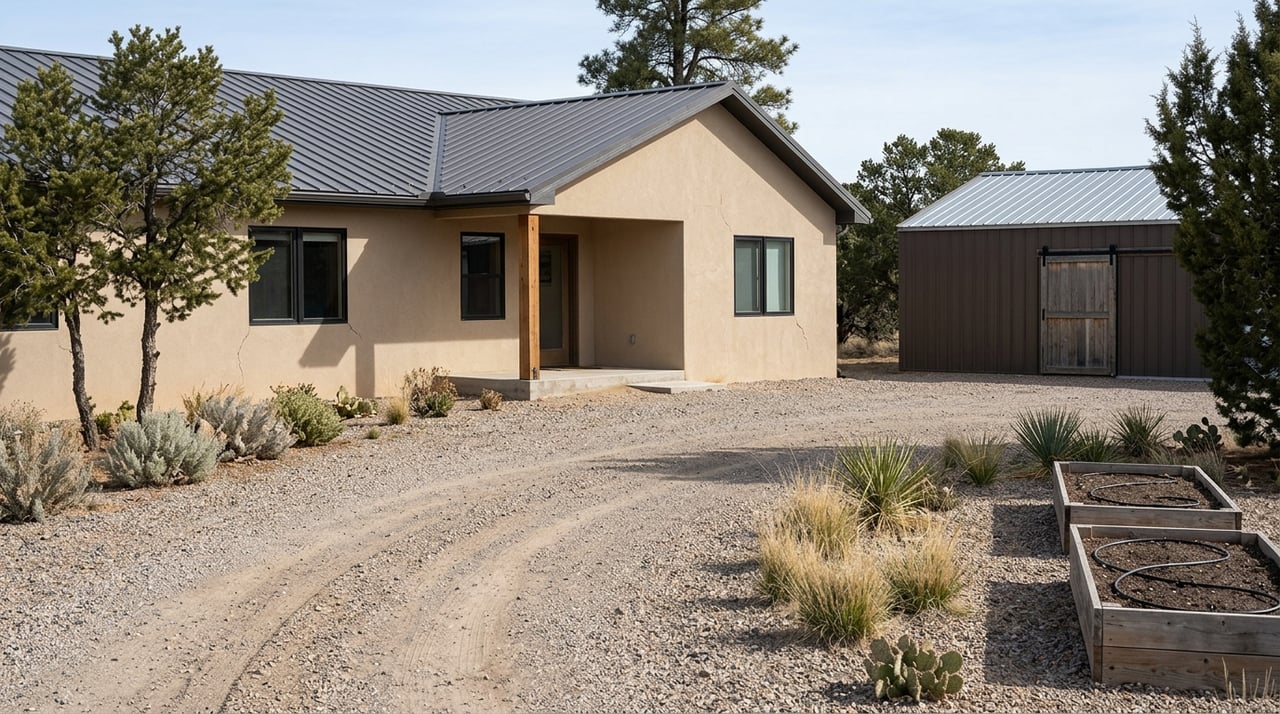
What To Look For In Small Acreage Around Dolores
June 11, 2026
June 11, 2026
Looking at small acreage around Dolores can feel simple at first. You see a few acres, a view, maybe some trees or irrigation, and it is easy to picture the life you want there. But in Montezuma County, small acreage is really about usability, not just how many acres are on the deed. If you want to buy smart or sell with confidence, knowing what actually makes land usable can save you time, money, and frustration. Let’s dive in.
Around Dolores, two properties with the same acreage can have very different value. One may be ready for a home, driveway, well, and septic. The other may be limited by access, steep slopes, setbacks, floodplain issues, or zoning.
That is why the first question is not just, “How big is it?” The better question is, “What can you realistically do with it?” In this market, that answer often shapes value more than the raw acreage number.
Zoning is one of the first things to review when you are evaluating small acreage near Dolores. In unincorporated Montezuma County, common rural categories include R-3, AIR 3-9, AIR 10-34, AGZ, and AIR 35+.
Those zones come with different minimum lot sizes. The county code sets minimum lot sizes at 3 acres for R-3 and AIR 3-9, 10 acres for AIR 10-34, and 20 acres for AGZ. The code also says rezoning to AIR 35+ will be routinely approved on 35 or more acres if standards are met.
Just as important, the zone affects use. R-3 is residential only, and agricultural, commercial, industrial, and PUD uses are prohibited there. AIR 3-9 is intended for residential purposes with accessory agricultural uses, which can make a big difference if you want more than a simple homesite.
If the parcel is in the Dolores River Valley, you need to look even more closely. This area gets special treatment in county code because it is a key water source.
Some zones are not allowed there. R-3 and AIR 3-9 are not allowable within the Dolores River Valley, which can directly affect what type of parcel you are buying and how it can be used.
There are also site-specific standards that matter. In the Dolores River Valley, a 10-acre residential lot must include at least 30 percent developable land with slopes under 30 degrees that can support engineer-designed septic. New commercial and residential construction, including sewage disposal systems, must also be set back 100 feet from the existing stream bank.
A parcel can meet the minimum acreage requirement and still be difficult to build on. Shape, slope, and layout matter.
Montezuma County uses a buildable or developable footprint test that requires a 230-foot-diameter circle to fit entirely inside the lot. That means narrow, oddly shaped, or heavily constrained parcels may look fine on paper but still function poorly as a building site.
This is one of the biggest reasons buyers should not rely on acreage alone. A clean rectangle with gentle terrain may offer more real-world use than a larger parcel with steep grades, awkward corners, or heavy setbacks.
Access is one of the most important things to verify on rural land. You want to know whether the property fronts a county-maintained road, a red-signed secondary county road, or a private road.
That difference matters because private roads may exist by prescriptive use, recorded easement, or plat dedication, but the county does not assume maintenance responsibility. The county also does not regulate utilities on private roads, and owner arrangements may be needed for emergency service access, mail delivery, and school pickup.
It is also important to know that a road shown on a plat is not automatically county-maintained. Montezuma County says subdivision roads are not officially accepted for maintenance unless the Board of County Commissioners accepts them by resolution.
If you plan to add or improve a driveway, keep this in mind too. No one may construct a driveway that provides vehicle access to or from a county road without an access permit from the Planning Department. If access is directly off a highway, the county directs applicants to contact CDOT.
For many small-acreage properties, water and wastewater planning are where the real due diligence begins. If the parcel is not connected to public sewer, Montezuma County requires a sewage disposal system before occupancy.
The county’s OWTS process is detailed. The application will not be accepted without a design from a Registered Professional Engineer, and it also requires a soil and site evaluation, inspection before backfill, and as-built certification.
Wells need attention too. Colorado DWR says every new well needs a permit, and complete applications may take up to 49 days to process. Montezuma County code also says proposed well-water development requires State Water Engineer permits.
If you are buying acreage with plans to build right away, this timing matters. A parcel that looks straightforward can still involve weeks of review before you are ready to move forward.
Utilities are not always obvious when you walk a property. Easements, service routes, and provider requirements can affect where you build and how much flexibility you really have.
Montezuma County notes that utility easements are determined in advance by the utility provider. The county GIS office also maintains parcel, road, address, soils, flood zone, terrain, and zoning data that can help reveal issues before closing.
If the property has irrigation ditches or pipelines crossing it or touching it, pay close attention. County code says development must preserve ditch use and maintenance access. For hobby farms, irrigated parcels, or any land where water delivery matters, that can have a major impact on value and layout.
Not every beautiful property is an easy property to use. Montezuma County says development should be avoided where flooding, wildfire, unstable slopes, or lack of basic services make a site unsuitable.
If a parcel is in a FEMA floodplain, proof of compliance with the county floodplain resolution is required. That does not always mean the land cannot work, but it does mean more review and potentially more limits.
Wildfire is also part of the picture in Southwest Colorado. Guidance from the Colorado State Forest Service notes that properties near wildland vegetation are in the wildland-urban interface and should create defensible space. If a parcel is wooded or steep, it is smart to understand mitigation needs early.
Parcel size still matters, of course. But around Dolores, the way a property behaves often depends on the mix of acreage, zoning, terrain, access, and utility feasibility.
Here is a practical way to think about common size ranges:
These parcels are usually the most constrained. Because the county’s minimum residential development lot size is 3 acres, properties below that often behave more like existing homesites near town edges or in older subdivisions.
Value at this size is often driven more by existing improvements, road access, and utility setup than by open-land potential.
This is the county’s basic rural-residential floor in the applicable zones. It is often the smallest size where a buyer can realistically think about a home with modest hobby use.
That said, it only works well if the parcel shape, access, and septic placement all line up.
Ten acres is often where flexibility starts to improve. AIR 10-34 begins at 10 acres, and the Dolores River Valley also uses a 10-acre residential minimum with the 30 percent developable-land rule.
In practical terms, this is often where outbuildings, gardens, and a more spacious rural setup start to feel realistic, subject to zoning and any covenants.
AGZ starts at 20 acres and is intended to prioritize agricultural production and protect primary and accessory agricultural uses. At this point, a parcel may begin to carry more credible agricultural value rather than functioning only as a house lot.
Still, use and classification are not automatic. You need to look deeper.
This range is often the most flexible end of small acreage. The code references AIR 35+ on 35 or more acres and treats some single-lot development situations differently when remaining acreage exceeds 35 acres.
Even here, though, access, water, terrain, and developable area still matter just as much as the acreage count.
This is a common point of confusion for buyers and sellers. A property is not automatically treated as agricultural for tax purposes just because it has open land, fencing, or room for animals.
The Montezuma County Assessor says agricultural classification depends on the land being part of a functioning farm or ranch used primarily for monetary profit from agriculture. Legal agricultural use must continue for two years before agricultural classification can be granted.
The assessor also notes that grazing or boarding pleasure horses does not qualify as ranching for tax-classification purposes. So if someone markets a parcel as horse property or ag land, it is worth verifying exactly what that means.
Small acreage deals tend to go more smoothly when you ask the right questions upfront. A few early calls can help you avoid expensive surprises.
You may want to bring in:
One more local point matters here. Montezuma County says it does not issue Certificates of Occupancy and does not enforce residential building codes, so county review should not be mistaken for a full private inspection.
If you are selling small acreage around Dolores, the best marketing usually starts with the same factors buyers care about most. Clear information builds trust and helps your property stand out.
Useful details often include road type, access permits, well status, septic feasibility, developable area, irrigation features, floodplain status, and zoning. If the parcel is in the Dolores River Valley, it also helps to be upfront about setbacks and developable-land requirements.
This kind of detail does more than answer questions. It helps buyers understand the property’s real utility, which is often the heart of value in this market.
If you are weighing a small-acreage purchase or trying to price land for sale near Dolores, local knowledge matters. The details that change value here are often not obvious from a listing photo or acreage number alone. If you want practical guidance grounded in Southwest Colorado land realities, reach out to Paul Adams and the Regents Real Estate Group team.
Stay up to date on the latest real estate trends.
Whether buying, selling, or investing in Cortez, Paul Adams provides personalized support, market insights, and a hands-on approach to ensure your real estate goals are achieved.