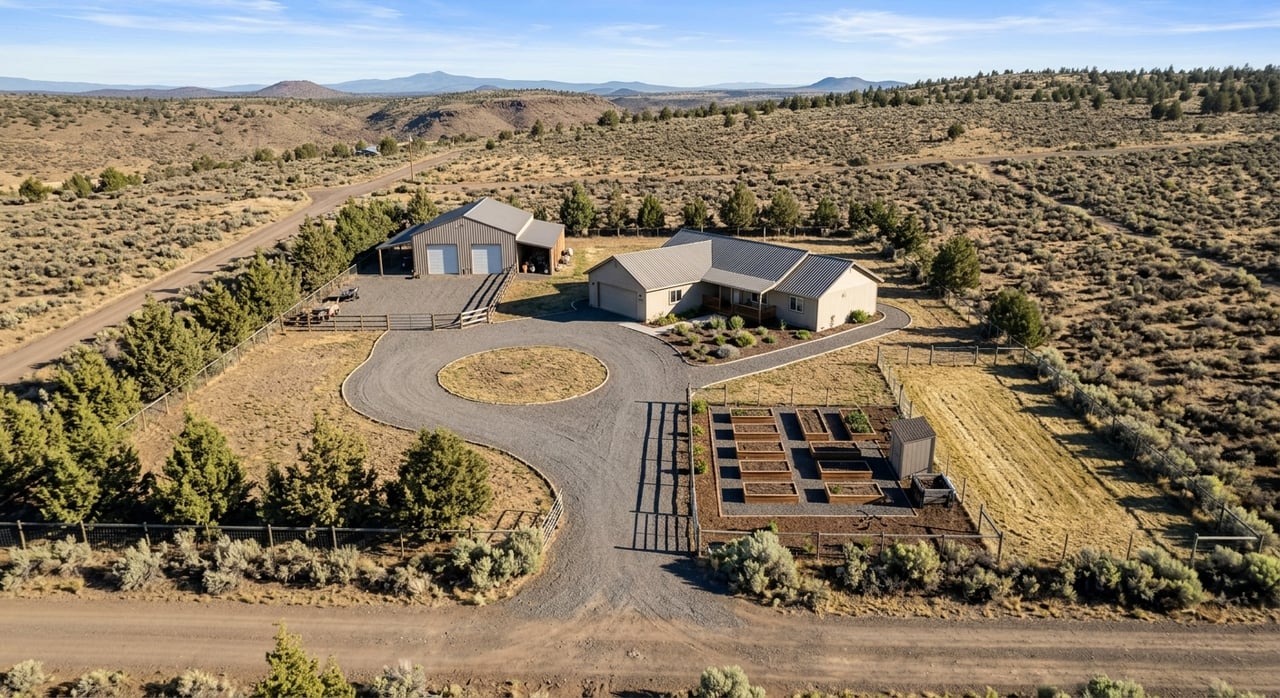
Small Farms And Hobby Ranches In Yellow Jacket
July 23, 2026
July 23, 2026
If you are dreaming about a little more elbow room, a few animals, a big garden, or a simpler rural setup, Yellow Jacket may already be on your radar. The challenge is that small farms and hobby ranches here can look very different from one property to the next, and that can make it hard to know what actually fits your plans. This guide will help you sort through acreage, zoning, utilities, access, and improvements so you can make a smarter move with more confidence. Let’s dive in.
In Yellow Jacket, the label matters less than the actual use of the property. The local market includes everything from smaller 5-acre homesites to much larger parcels over 200 or even 800 acres, so there is no single “standard” hobby ranch size.
That range means you should start with your goals first. If you want a house with room for a shop and a garden, your needs may be very different from someone looking for pasture, hay ground, or livestock infrastructure.
In Montezuma County, zoning is a major part of the conversation for rural property. The county land use code defines A/R 3-9 as small-scale agriculture and residential, A/R 10-34 as medium-scale, and A/R 35+ as large-scale.
For A/R 35+, the minimum lot size is 35 acres. The county also allows certain cluster incentive provisions that can permit up to three home sites per 35 acres while preserving 75 percent of the parcel for agriculture or open space.
The county defines agricultural use broadly, including cultivating crops or raising livestock. Even so, zoning is only part of the picture, because recorded restrictions and permit requirements can still affect what you can do with a property.
It is easy to assume more acres always means more opportunity, but that is not always true. A smaller parcel with usable water, septic, road access, and a barn may be far more practical than a larger piece of raw land that still needs major work.
In Yellow Jacket, some properties function more like rural residential homesites, while others are set up for a more active agricultural use. The better question is not just “How many acres?” but “What can this land support today?”
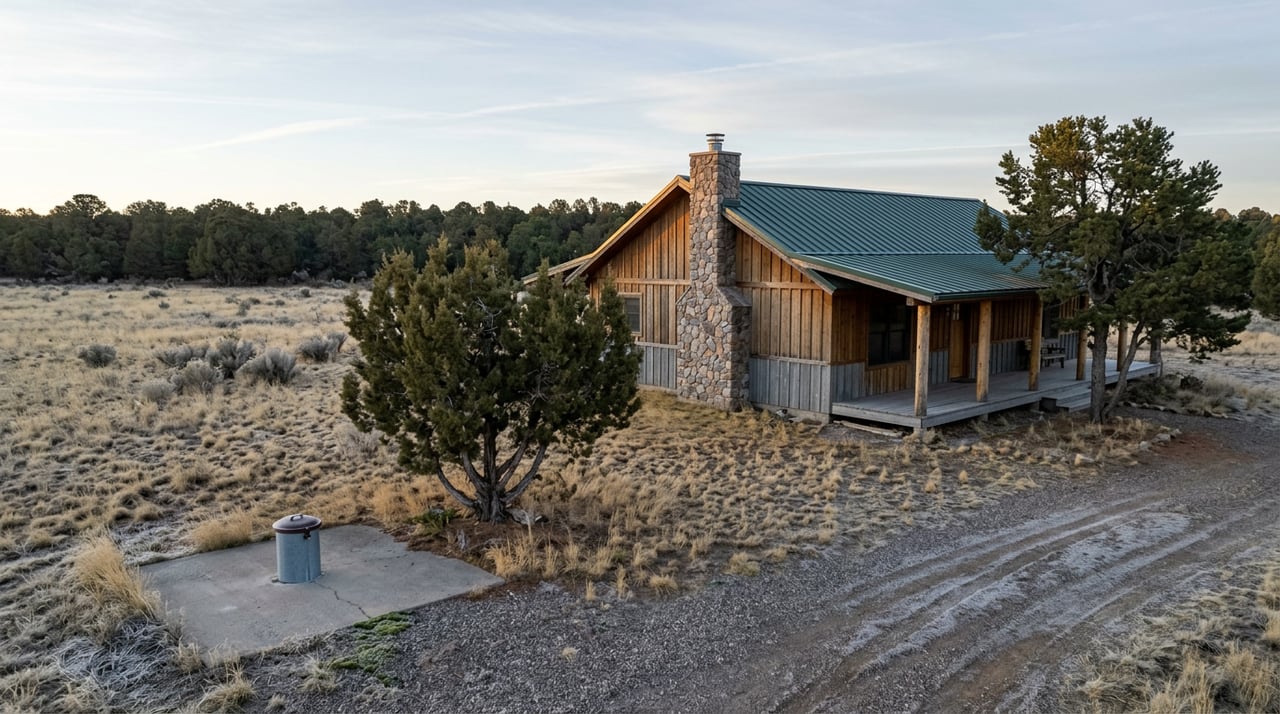
One of the biggest differences between Yellow Jacket properties is infrastructure. Current examples in the market show a wide mix of improvements, from basic homesites to larger ranch properties with more complete systems already in place.
Some parcels may include features like:
Other properties may have only the essentials, or they may need significant upgrades before they can support your intended use. That gap affects not just the purchase decision, but also your timeline, budget, and maintenance expectations.
For small farms and hobby ranches, utilities are not something you want to assume. In Yellow Jacket, electric service, water source, and wastewater setup can vary a lot from parcel to parcel.
Some properties are connected to standard electric service, while others rely on solar, batteries, propane, and generator backup. Empire Electric Association’s District 1 includes Yellow Jacket, but that does not mean every parcel will have the same level of service or connection in place.
Water is just as important. Some properties have central water, some have wells, and some may rely on cistern systems in limited situations where potable rural water is not otherwise available.
Montezuma County handles new development through several departments, including planning, septic and environmental health, addressing and GIS, and road and bridge. Every residential and commercial development needs a county-assigned 911 address.
For wastewater, county environmental health reviews septic permits, and Colorado OWTS rules apply. The county says septic site evaluations consider factors such as groundwater, soil, bedrock, and nearby wells, ditches, and structures.
Wells require permits from the State Water Engineer. If you are comparing properties, it helps to treat the water source and septic setup as core parts of the property, not afterthoughts.
A property may look great online, but access can shape how it feels to own it year-round. Montezuma County requires driveway permits for access onto county roads, and direct highway access goes through CDOT.
The county notes that road acceptance and maintenance depend on the road’s status. The Road and Bridge department maintains 517 miles of county roads, while 186 miles are privately maintained, and surfaces range from chip seal to gravel to graded earthen roads.
That means two properties in the same general area can offer very different day-to-day experiences. One may have paved access and public winter maintenance, while another may be much more rugged and project-oriented.
Yellow Jacket can be a strong fit if you want rural space and a semi-agricultural lifestyle. Depending on the parcel, that might include hay, pasture, gardening, orchards, or a small livestock setup.
Colorado State University Extension notes that small acreages can work for beef cattle, but success depends on matching forage supply, stocking rate, and infrastructure. On dryland small acreages in Colorado, forage often will not support animals year-round without hay or grain supplementation.
That makes a conservative plan important. If your goal is a few animals and healthy pasture, strong management may matter more than trying to maximize herd size.
CSU Extension emphasizes grazing plans, rotational grazing, short grazing periods, and sacrifice areas to help keep pasture productive. For many buyers, that is a useful reality check.
A hobby ranch does not have to be huge to be enjoyable, but it does need to be workable. Water, fencing, forage, and the right expectations all matter if you want the property to stay usable over time.
If your vision leans more toward gardening, fruit trees, or a homestead setup, local support exists through Montezuma County’s CSU Horticulture resources. The county’s horticulture page offers yard and garden help, soil and water testing, and points to a Yellow Jacket fruit-tree and vineyard demonstration project.
That is encouraging for buyers with more intensive land-use goals. Still, success will depend on whether the parcel’s soil and water conditions match what you want to grow.
If you may want to add a shop, another dwelling, or make other changes later, it is smart to ask those questions upfront. Future flexibility usually comes down to zoning, recorded restrictions, and permitability.
Some Yellow Jacket properties are marketed with no HOA or no covenants, but that is always parcel-specific. Before you count on future options, you should verify the applicable zone and any recorded restrictions tied to the land.
When you look at small farms and hobby ranches in Yellow Jacket, it helps to evaluate them through a simple checklist. A beautiful setting is important, but the practical details are what tell you whether a property fits your lifestyle.
Focus on questions like these:
This kind of review can help you separate a ready-to-use rural property from one that may require more time, money, and problem-solving.
The strongest Yellow Jacket properties are usually not the ones with the biggest acre count. They are the ones where water, access, power, septic, and intended use all line up well.
If a property is farther from a paved, county-maintained road and does not yet have a legal address or reliable water source, it may function more like a project than a finished rural homesite. That does not make it a bad option, but it does mean you want to go in with open eyes.
Whether you are looking for a manageable homestead, a rural home with room to grow, or a small ag property with practical infrastructure, local guidance can make a big difference. If you want help sorting through Yellow Jacket acreage and finding the right fit for your goals, reach out to Paul Adams for clear, local insight.
Stay up to date on the latest real estate trends.
Whether buying, selling, or investing in Cortez, Paul Adams provides personalized support, market insights, and a hands-on approach to ensure your real estate goals are achieved.