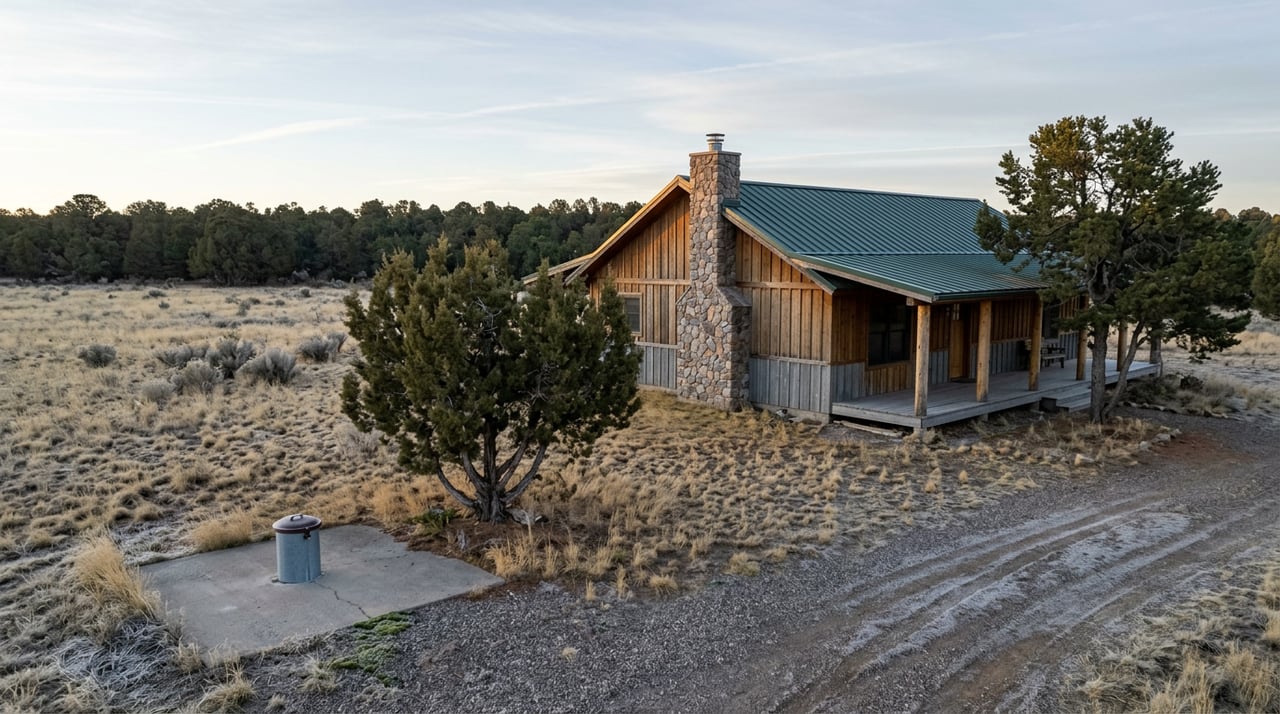
Mancos Is Named After Its Shale. Your Well Water Will Prove It.
September 24, 2026
September 24, 2026
Why does a house in the Mancos Valley with a beautiful well and a working septic system still need a full inspection before closing, when the seller swears both have been fine for twenty years? Because in this part of Montezuma County, the ground itself has an opinion, and it shows up in the water before it shows up in the paperwork.
Most buyer guides treat a well and septic inspection as a box to check on the way to closing. In Mancos, that inspection is closer to a diagnostic test, and the diagnosis is written into the town's own name.
Mancos Shale is not a metaphor. It is a real geological formation, one of the most widespread rock layers in the Four Corners, and the town sits right on top of it. Local well and pump technicians who work this ground routinely see the same pattern: wells drilled through Mancos Shale and the neighboring Dakota Sandstone can come up hard, with elevated iron, manganese, and occasional trace arsenic, according to Animas Well Drilling, a Durango-based company that services wells across the Four Corners. The same guidance notes that across the ranch lands of Cortez and Mancos, water quality checks also screen for bacterial intrusion tied to nearby agricultural activity, since irrigated hay ground and grazing land sit close to a lot of domestic wells out here.
None of that means Mancos water is bad. It means Mancos water is specific, and specific is exactly what a listing sheet cannot tell you. A well that has served one family for thirty years without complaint can still carry mineral levels that a new owner notices immediately in staining, taste, or scale buildup on fixtures. The only way to know before you own it is to test it before you own it, not after.
A serious well inspection in this valley is not a quick dip of a test strip. Technicians who work the local geology look at static water level, sustained yield under load, and pump performance, then pull water samples to check on site for hardness, iron, and manganese before sending split samples to a certified lab for bacteria and trace metals. Rapid spring snowmelt followed by a dry late summer can also push static water levels down several feet between June and September, which is worth knowing if you are closing on a property in August and comparing it to how the well performed the previous spring.
The point is not to scare anyone off a well. Most wells in the Mancos Valley work fine for the household they serve. The point is that "the well works" and "the well is documented" are two different claims, and only one of them protects you after you own the place.
Montezuma County runs a Transfer of Title program for on-site wastewater systems, meaning a septic inspection can be required specifically because the property is changing hands, independent of whether anything is currently wrong. According to reporting on the county's septic regulations, a title transfer triggers a required inspection when a property meets any of the following:
If you are buying an older farmhouse in the Mancos Valley, there is a real chance you fall into one of the first two categories without anyone mentioning it at the open house. That is not a red flag on the property. It is simply how the county keeps septic records current as ownership changes, and it means the inspection you were probably going to order anyway is also a compliance requirement, not an optional nicety. The county's own septic information brochure, available through Montezuma County's public health department, lays out what the inspection covers and what happens if a system needs repair before the title can transfer cleanly.
Colorado's well construction rules require a well to sit at least 100 feet from any contaminant source and at least 50 feet from a septic tank or sewer line, unless a variance has been granted, a standard set by the state's Division of Water Resources. On a tight in-town lot, that setback can quietly decide where a future garage, barn, or addition is even allowed to go. On acreage with irrigated pasture, it usually is not a problem, but it is worth confirming before you fall in love with a building site that turns out to sit inside the buffer.
The same office also handles well permit records, and it matters here because water rights in Colorado run under the prior appropriation system, meaning older, senior rights get satisfied before newer ones during a shortage. A well that has served a Mancos property for decades likely carries a well-established priority date. A newly drilled well on adjacent land may not carry the same standing. That distinction rarely shows up in a walkthrough, but it shows up in the well permit record, which is public and searchable.
If you are looking at property in the Mancos Valley, whether it is a walkable in-town cottage or acreage with irrigated hay ground toward Echo Basin, treat the well and septic file as seriously as you treat the inspection report on the house itself. Ask for the well permit number and pull the record yourself. Ask how old the septic permit is, not just whether the system currently works. If the answer is anywhere near twenty years or the structure predates 1974, plan for the Transfer of Title inspection as a certainty, not a possibility, and build the timeline into your offer.
In-town properties here typically connect to municipal water and sewer, which sidesteps most of this. Once you move outside town toward the valley's pastureland and ranchettes, private wells and septic systems become the norm, and that is exactly where the shale, the setbacks, and the county's transfer rules start to matter.
If you are getting ready to list a rural Mancos property, do not wait for a buyer's inspector to be the first person to open the well and septic file. Pull your own well permit record and confirm it matches what is actually installed. If your septic permit is old enough to fall under the county's Transfer of Title criteria, get ahead of the inspection rather than let it surface mid-contract, when timelines are tighter and negotiating leverage shifts. A clean, current file on both systems is one of the more persuasive things you can hand a buyer who has read enough listings to know that "well and septic" can mean almost anything.
Does every property in the Mancos area need a well and septic inspection to sell? Not every property triggers the county's mandatory Transfer of Title inspection, but any private well or septic system benefits from a current inspection regardless of the trigger criteria, since it protects both sides of the transaction.
If the water test comes back with iron or hardness, does that kill the deal? Not typically. Hardness and iron are common in wells drawn through Mancos Shale and Dakota Sandstone and are usually addressed with a treatment system rather than a new well. Bacterial contamination or a failed yield test is a different conversation and worth taking seriously.
Can I just rely on what the seller tells me about the well? No. Well performance can shift with the seasons, and a seller's memory of "it's always been fine" is not the same as a documented flow test. Ask for the paperwork or order the test yourself before your inspection contingency expires.
Buying or selling a well and septic property in the Mancos Valley is not harder than any other transaction here, it just asks you to read the ground the same way you read the house. If you are weighing a move into the valley or getting a rural property ready to list, our Mancos neighborhood guide, buyer's guide, and seller's guide walk through the rest of the process. Or start with a straightforward look at what your property is worth today. Get Your Free Home Valuation from the team at Regents Real Estate Group, and we will help you figure out what the ground under your feet is actually telling you.
Stay up to date on the latest real estate trends.

Whether buying, selling, or investing in Cortez, Paul Adams provides personalized support, market insights, and a hands-on approach to ensure your real estate goals are achieved.