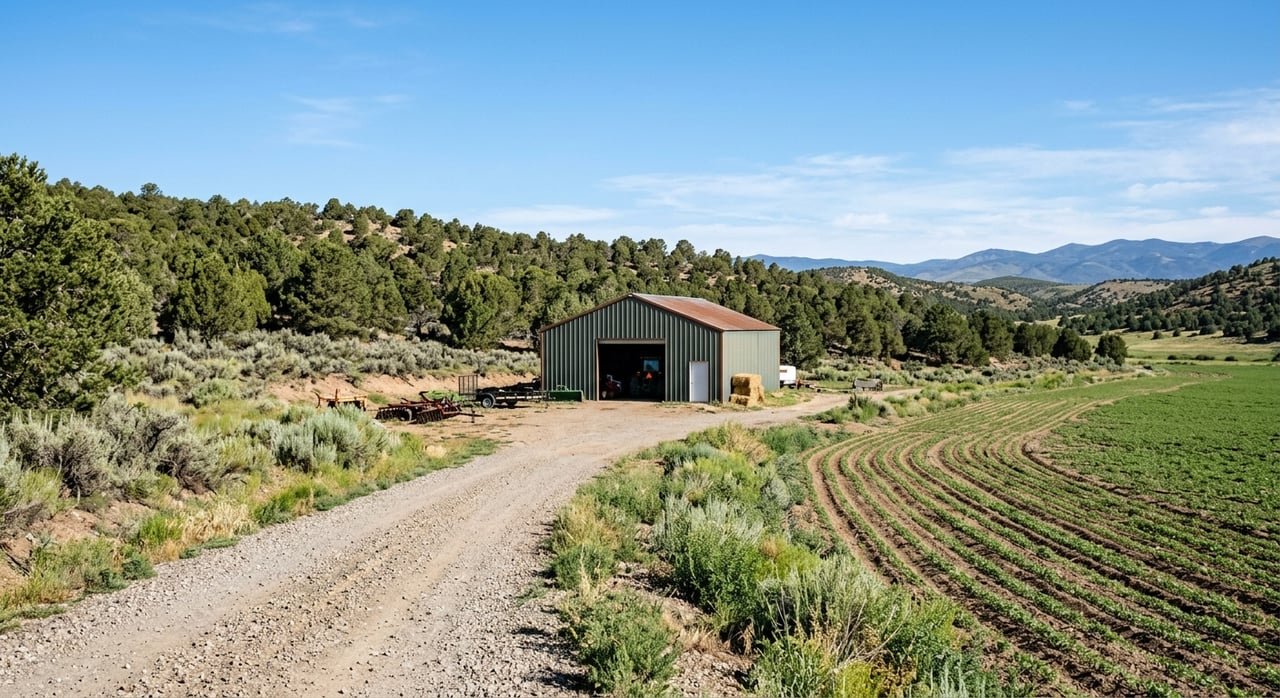
Selling Farmland Or Acreage Around Dove Creek
July 9, 2026
July 9, 2026
If you are thinking about selling farmland or acreage around Dove Creek, you already know this is not a market where price comes down to acre count alone. Buyers often look first at how the land works, what it can produce, how it is accessed, and whether the paperwork supports the story. When you understand what matters locally, you can prepare your property more clearly, market it more effectively, and avoid surprises during the sale. Let’s dive in.
Dolores County covers 1,064 square miles, with mostly high mesas and narrow valleys in the west and high mountains in the east. Around Dove Creek, that terrain shapes how buyers view land. In many cases, acreage is evaluated as working ground first and homesite potential second.
That local context matters because agricultural land here is not one-size-fits-all. According to the USDA 2022 Census of Agriculture county profile, Dolores County has 264 farms covering 161,407 acres, with an average farm size of 611 acres. The same report shows that only 5,415 acres are irrigated, or about 3% of land in farms, which makes water and production history especially important.
When buyers look at farmland or rural acreage near Dove Creek, they are often trying to answer a practical question: what does this property actually offer? That answer usually comes from a mix of land use, water, soils, access, and income potential.
The county crop mix helps explain that focus. USDA data shows the largest crop acreages in Dolores County were wheat, safflower, forage, and dry edible beans, with 65% of farm sales tied to crops and 35% to livestock. That means many buyers will pay close attention to whether the ground has a proven agricultural use and whether the supporting records are in place.
Because only a small share of county farmland is irrigated, parcels with irrigation or documented water rights may stand out. Buyers will want to understand not just whether water exists, but how it has been used and whether the use can be verified.
Dolores County's assessor reviews water rights and how water is used when evaluating agricultural property. If your property includes wells, irrigation equipment, or decreed water rights, those records should be easy to share. Clear documentation can help buyers evaluate the property with more confidence.
Soils matter because they affect what the land can support and how it may be managed. For acreage buyers, soil maps and soil-unit reports can be practical pricing and marketing tools, especially when the property has active or recent agricultural use.
The USDA NRCS Web Soil Survey provides current soil and related information for land-use and management decisions. For a seller, that means soil documentation can help move the conversation from vague claims to useful facts. It also helps buyers compare your parcel to other options more fairly.
Access can be a bigger issue than some sellers expect. Dolores County requires a driveway permit for access to county roads, and a CDOT access permit is required for access to state highways when applicable.
If the acreage also has homesite appeal, buyers may ask about more than road access. County land-use rules say a homesite may need potable-water evidence, water-right documentation where applicable, and an Individual Sewage Disposal System permit or sewage-disposal report when on-site septic is planned. Even if your buyer is focused on agriculture, these details can still affect value and marketability.
Colorado does not treat agricultural property value as a simple per-acre math problem. State law says agricultural land is land used the previous two years and presently used as a farm or ranch, regardless of zoning, and it must have been classified or eligible for classification as agricultural land during the previous ten years.
Colorado law also recognizes land with decreed water rights used for agricultural production and certain conservation-restoration situations. For sellers, that means the land's documented use history matters. If the property has changed use recently, you may need to be especially careful about how it is presented.
Colorado's legislative analysis explains that agricultural actual value is driven by earning or productive capacity. Main inputs include the 10-year average commodity or grazing rental rate, soil classification, typical landlord crop share, net income, and the statutory capitalization rate.
Assessors must also consider current use, zoning, multi-year leases, easements, and restrictions when determining value. In plain terms, two properties with the same acreage near Dove Creek can carry very different value stories. A parcel with stronger soils, better access, lease income, or irrigation may be viewed very differently from a similar-sized tract without those features.
For the 2026 property tax year, Colorado sets the valuation-for-assessment rate for real and personal property classified as agricultural property at 25% of actual value. That is not a rule for market price, but it can still matter to owners and buyers.
Lower property-tax pressure compared with other nonresidential land classifications can shape how buyers evaluate holding costs. If your land is classified agricultural, it helps to have that documentation ready. If classification is pending or uncertain, that should be clarified early.
A strong acreage listing around Dove Creek usually starts with a strong document package. Serious buyers for farm and ranch ground often ask detailed questions early, and the smoother your answers are, the easier it is to build trust.
Dolores County says agricultural property is land used primarily to produce profit from crops or grazing animals, and the owner must apply for agricultural classification. The county asks for receipts, leases, or Schedule F evidence, and its appraiser reviews land uses, soil types, water rights, how the water is used, and information on occupants of homes.
County guidance also says the county needs one full year of verified use on properties with adjudicated water rights, or three consecutive years of verified use on properties without water rights, before the parcel can be classified agricultural. That timeline is important if your land is transitioning into or out of ag use.
Before you list, it helps to gather:
The assessor also collects information such as land size, legal description, improvements, ownership, address, and site shape and size. Having those details organized up front can make the listing process more efficient and help reduce delays once buyers begin due diligence.
Pricing rural land in this area takes more than checking recent sales and dividing by acres. Because Colorado agricultural valuation is tied to productive capacity and county review focuses on use, soils, water, and restrictions, pricing should reflect what the property can support and how clearly that can be documented.
That is one reason similar tracts can land at very different price points. If your property has incomplete records, uncertain water status, or unresolved access issues, buyers may discount it for risk. If the property has organized records, established use, and practical strengths that are easy to verify, it may be easier to position competitively.
Timing can matter if the property is in transition. Since Colorado and Dolores County both rely on documented use history before agricultural classification is granted, a seller may need time to strengthen records before going to market.
That does not always mean waiting, but it does mean making an informed plan. In some cases, a property can be marketed more effectively once use records, water documents, or access questions are better organized. In others, the right approach is to price the land according to what is verified today.
Selling land around Dove Creek often means translating technical details into a clear, useful story for buyers. You want buyers to understand not just what the property is, but how it has been used, what supports that use, and what documents back it up.
That kind of preparation fits well with a brokerage that understands valuation, land, and rural property in Southwest Colorado. With Paul Adams' assessor background and Regents Real Estate Group's experience across land and agricultural property, you can get practical guidance on separating productive acreage value from improvement or residential value, organizing your listing materials, and presenting the property clearly to serious buyers.
If you are getting ready to sell farmland or acreage around Dove Creek, a well-prepared listing can make a real difference. When you want grounded local advice and a clear strategy, reach out to Paul Adams for guidance tailored to your property.
Stay up to date on the latest real estate trends.

Whether buying, selling, or investing in Cortez, Paul Adams provides personalized support, market insights, and a hands-on approach to ensure your real estate goals are achieved.